Technical specifications
- Adjustable setting
- Reusable
- Consistent pressure
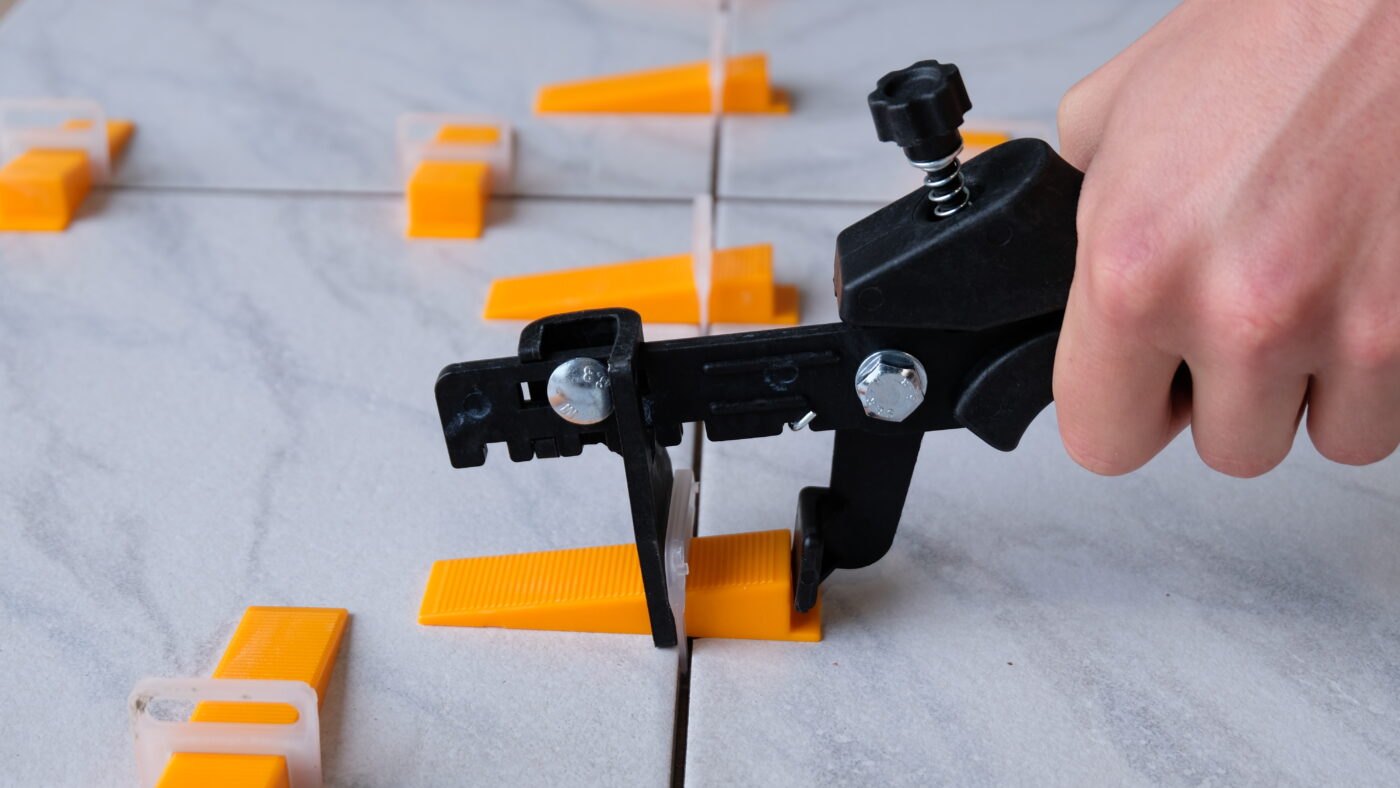




The adjustable metal levelling pliers from Levelit are designed for professional, intensive use. Their adjustable setting allows precise adaptation to different tile thicknesses, ensuring fast, accurate and consistent tile installation.
Technical specifications
| |  | |
Specifications | ADJUSTABLE METAL PLIERS | ADJUSTABLE PLASTIC PLIERS |
Reference | FP-1 | FP-1 |
EAN code | 5430000539326 | 5430000539333 |
Material | Metal | Plastic |
Compatible with | Wedge levelling system | Wedge levelling system |
Documents |
The Levelit Adjustable Metal Pliers are designed for professional tilers who use tile levelling systems every day. Their robust metal construction provides outstanding durability and a long service life, even under demanding site conditions.
The adjustable setting allows the pliers to be easily adapted to different tile thicknesses. This ensures consistent pressure is applied to the wedges and spacer clips, resulting in precise tile alignment and a perfectly level finish. The ergonomic design improves comfort and control, enabling fast and efficient installation, even on large tiling projects.
Step 1: Loosen the top screw almost completely.
Step 2: Place the pliers on the clip and wedge.
Step 3: Tighten the clamp and turn the screw until you feel the pliers release slightly.
Step 4: The clamping force is now set for the project, allowing you to apply the same pressure to every tile.
The front part of the pliers’ head can be adjusted to set the correct tile thickness.
Watch the video on how to adjust the pliers. You can find it in the product images.
The number of clips and wedges required depends on several factors, including the tile size and the total area to be tiled. Refer to the consumption guide below to calculate the required quantity.
 Step 1
Measure the length and width of your tile. Then locate these dimensions in the consumption chart alongside. The point where the two measurements intersect indicates the number of clips required per m2.
Calculate the total area to be tiled in m² by multiplying the length by the width of the area.
Multiply the number of clips required per m2 (from Step 1) by the total area to be tiled (from Step 2). This gives you the total number of clips required for your project.
| | | |
Specifications | ADJUSTABLE METAL PLIERS | ADJUSTABLE PLASTIC PLIERS |
Reference | FP-1 | FP-1 |
EAN code | 5430000539326 | 5430000539333 |
Material | Metal | Plastic |
Compatible with | Wedge levelling system | Wedge levelling system |
Documents |
The Levelit Adjustable Metal Pliers are designed for professional tilers who use tile levelling systems every day. Their robust metal construction provides outstanding durability and a long service life, even under demanding site conditions.
The adjustable setting allows the pliers to be easily adapted to different tile thicknesses. This ensures consistent pressure is applied to the wedges and spacer clips, resulting in precise tile alignment and a perfectly level finish. The ergonomic design improves comfort and control, enabling fast and efficient installation, even on large tiling projects.
Step 1: Loosen the top screw almost completely.
Step 2: Place the pliers on the clip and wedge.
Step 3: Tighten the clamp and turn the screw until you feel the pliers release slightly.
Step 4: The clamping force is now set for the project, allowing you to apply the same pressure to every tile.
The front part of the pliers’ head can be adjusted to set the correct tile thickness.
Watch the video on how to adjust the pliers. You can find it in the product images.
The number of clips and wedges required depends on several factors, including the tile size and the total area to be tiled. Refer to the consumption guide below to calculate the required quantity.
Step 1Measure the length and width of your tile. Then locate these dimensions in the consumption chart alongside. The point where the two measurements intersect indicates the number of clips required per m2.
Calculate the total area to be tiled in m² by multiplying the length by the width of the area.
Multiply the number of clips required per m2 (from Step 1) by the total area to be tiled (from Step 2). This gives you the total number of clips required for your project.